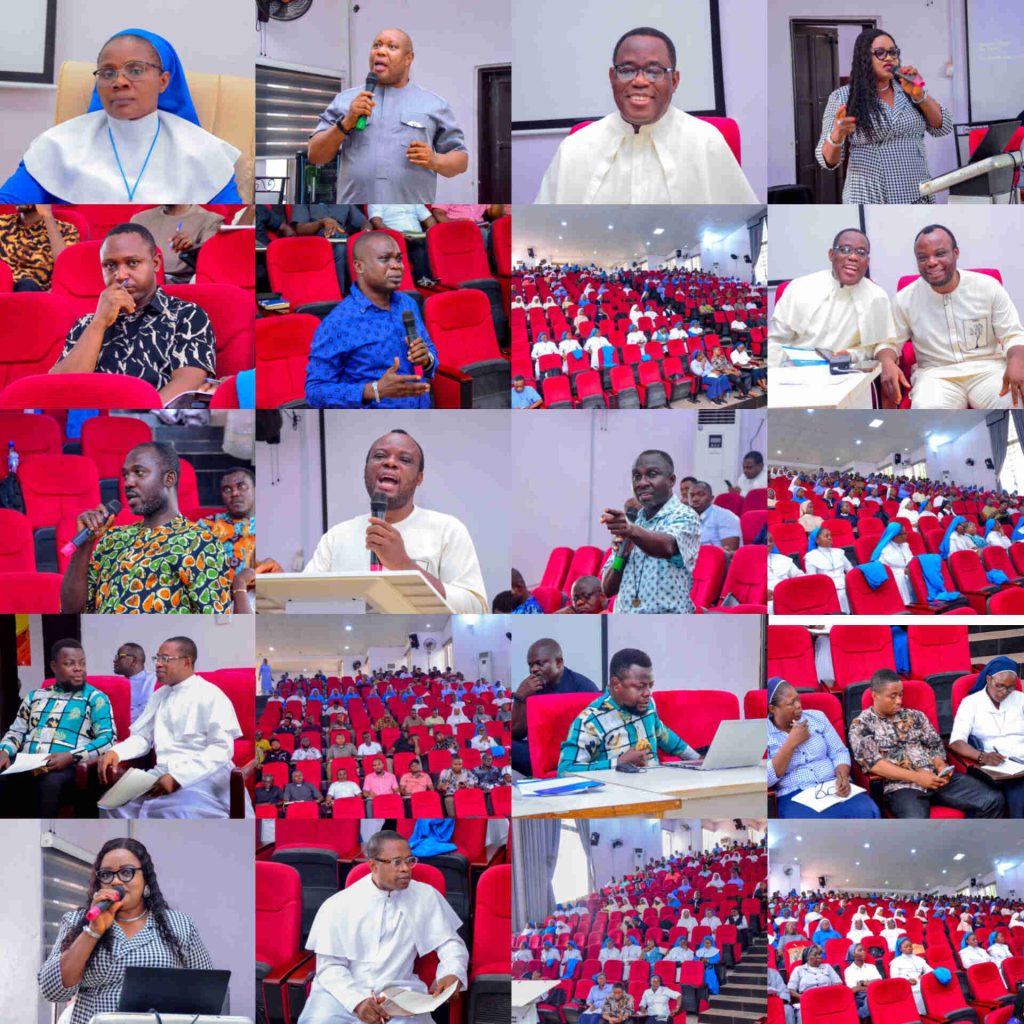
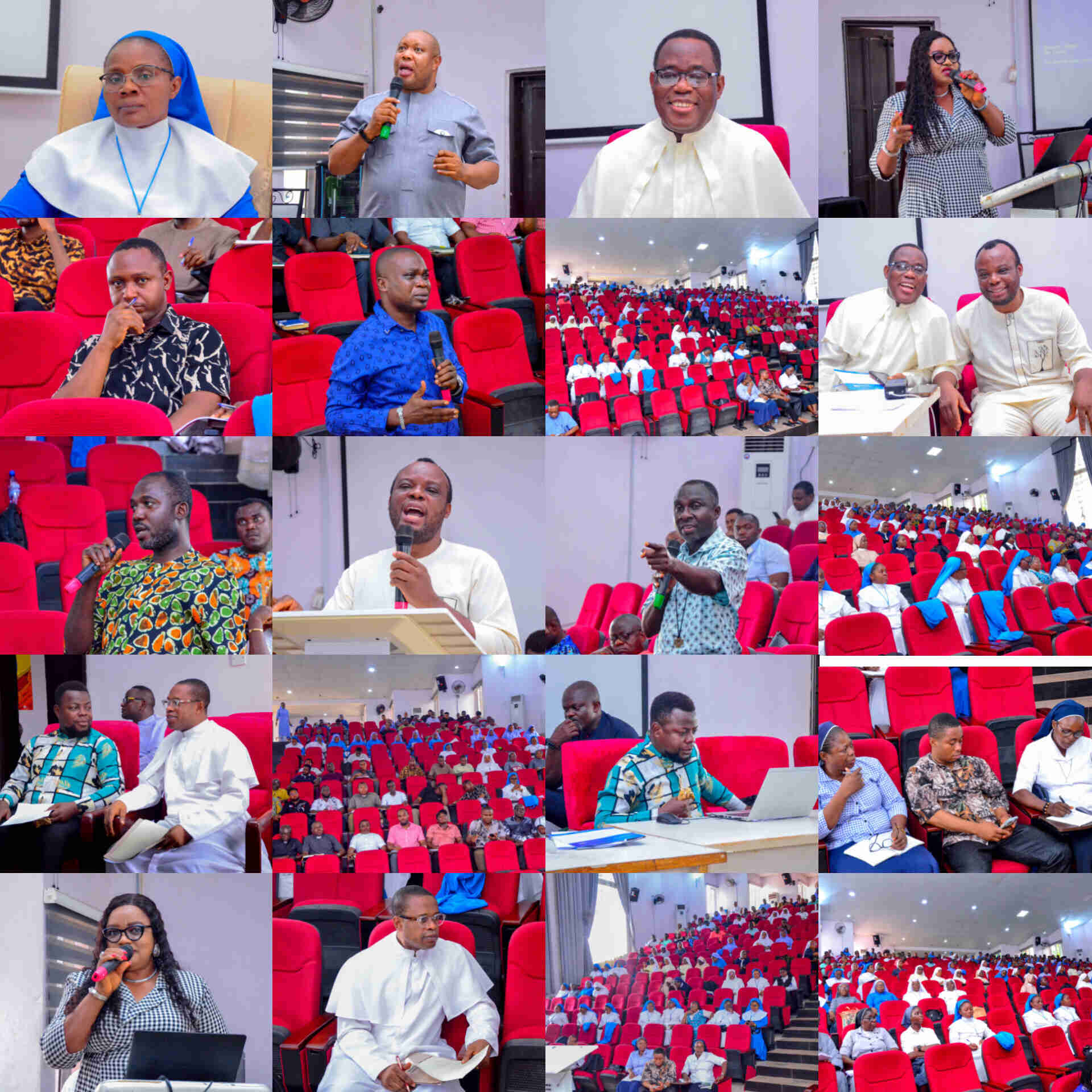
Organized by the Faculty of Education in partnership with the Enugu Centre for Experiential Learning, the program is designed to bring clergymen and religious leaders to the forefront of the ongoing educational transformation in the state.
The workshop, held at the Peter Mbah Law Auditorium, was declared open by the Vice Chancellor, Rev. Fr. Prof. Christian Anieke. Represented by the Deputy Vice Chancellor (Academic), Rev. Sr. Prof. MarySylvia Nwachukwu, the Vice Chancellor, emphasized that the 21st-century educational environment demands continuous retraining of teachers and formators. This initiative ensures that stakeholders are not just observers but active drivers of the state’s reform agenda.
Focusing on the “Fourth Industrial Revolution,” the Executive Secretary of the Enugu State Catholic Education Commission, Rev. Fr. Prof. Ikechukwu Ani urged participants to embrace the digital and green revolution. He noted that reskilling is no longer optional but a necessity to remain relevant in a world shaped by smart technology.
The Lead Facilitator and Dean of the Faculty of Education, Rev. Bro. Prof. Ekene Osuji described the workshop as a “movement toward transformative education.” Over the five-day period, participants will dive deep into AI-driven solutions, experiential learning strategies, and digital assessment tools. The goal is to equip educators with the competencies needed to manage the state’s emerging “Smart Green Schools.””
The Enugu State Commissioner for Education, Prof. Ndubueze Mbah praised the partnership between the Catholic Diocese of Enugu and the state government. He clarified that the transition to experiential, skill-based learning is a statewide mandate. He underscored that the success of the over 260 newly constructed Smart Green Schools depends entirely on the capacity of the teachers to deliver high-quality, innovative instruction.
Dr. Chinyere Onyesi, Special Adviser to the Governor on Education Innovation, highlighted that the ultimate aim of these government investments is to produce creative students capable of thriving in a modern economy. By overhauling the curriculum and upgrading infrastructure, the state is setting a new benchmark for educational excellence in Nigeria.
The training, which began on Monday, May 11, will conclude on Friday, May 15, 2026, following a final assessment and certificate presentation for all participants.